


LAST DAY TO GET 40% OF GUARDIAN MEMBERSHIPS
🔥 40% OFF — $4.79/mo OR $47.99/yr (2 months FREE)
🛰️ INTEL ACCESS: 15 encrypted/private GUARDIAN channels (real-time alerts & analysis)
🚨 SDENS ALERTS: instant emergency notifications direct to your device
What happens when the water gets shut off?
Americans assume water will always be there. Turn the tap, flush the toilet, fill the pot. Clean, pressurized, endless. That assumption is one of the most dangerous illusions of modern life.
The reality is far more brittle. The U.S. water system is aging, fragmented, digitally exposed, and lightly defended. It was not designed to operate in a hostile threat environment. In a Phase II scenario, where terrorism is used as a catalyst rather than a standalone act, water becomes one of the fastest ways to destabilize an entire population.
You don’t need to level buildings to cripple a city. You only need to interrupt its water
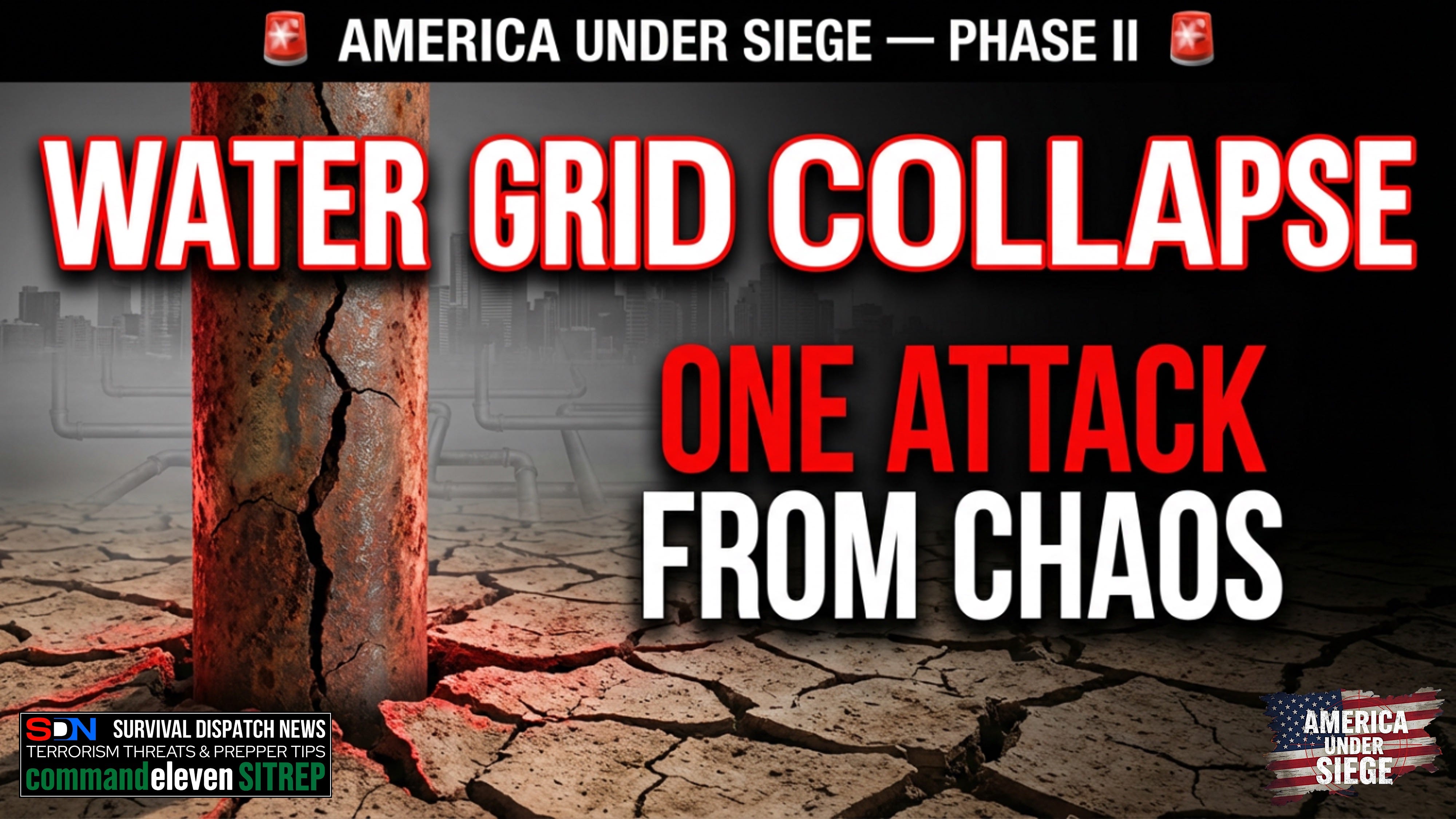
There Is No “National Water Grid”
There are more than 50,000 community water systems and 16,000 wastewater systems in the United States. Most are locally operated, underfunded, and stretched thin. Many rely on infrastructure installed decades ago, long before cyber threats, insider sabotage, or coordinated attacks were part of the equation.
This decentralization creates opportunity. An adversary does not need to attack everywhere. They need to attack selectively, sequentially, and intelligently.
Hit the right systems in the right order and the effects ripple far beyond the original target.

The Three Ways Water Gets Weaponized
Physical Sabotage
Water infrastructure is vast and exposed. Pump stations sit miles from population centers. Valves and access points are often protected by nothing more than a fence and a lock. Reservoirs are open-air. Pipelines run under roads, fields, and industrial zones.
A small team with basic tools can:
Disable pumps
Drain or damage reservoirs
Cut transmission lines
Interrupt supply to hospitals and dense neighborhoods
This is low-cost, low-skill sabotage with disproportionate impact.
Cyber Intrusion
Many utilities operate legacy control systems that were never designed for security. Some are remotely accessible for convenience. Others still use default credentials or outdated software.
A successful intrusion can:
Shut down pumps
Manipulate chemical treatment
Falsify sensor readings
Delay detection until damage is already done
By the time authorities realize something is wrong, the crisis is already public.
Psychological Contamination
This is the most powerful vector of all.
You do not have to poison the water. You only have to convince people that it might be poisoned.
A credible threat, paired with visible disruption, can trigger panic in hours. Grocery shelves empty. Bottled water disappears. Hospitals surge. Trust collapses. Once people stop believing the water is safe, normal life stops functioning.

Water Failure Cascades Faster Than Power Failure
Power outages are disruptive. Water outages are existential.
Within 24 hours:
Hospitals struggle with sanitation
Fire suppression capacity drops
Restaurants and food processing shut down
Public hygiene rapidly degrades
Within 72 hours:
Sewage systems begin backing up
Disease risk increases
Urban populations start self-evacuating
Law enforcement shifts from public safety to crisis control
Water failure does not degrade slowly. It compounds.

LAST DAY TO GET 40% OF GUARDIAN MEMBERSHIPS
🔥 40% OFF — $4.79/mo OR $47.99/yr (2 months FREE)
