


The Unfiltered Voice of Christian Preparedness
Watch the recorded episode HERE.
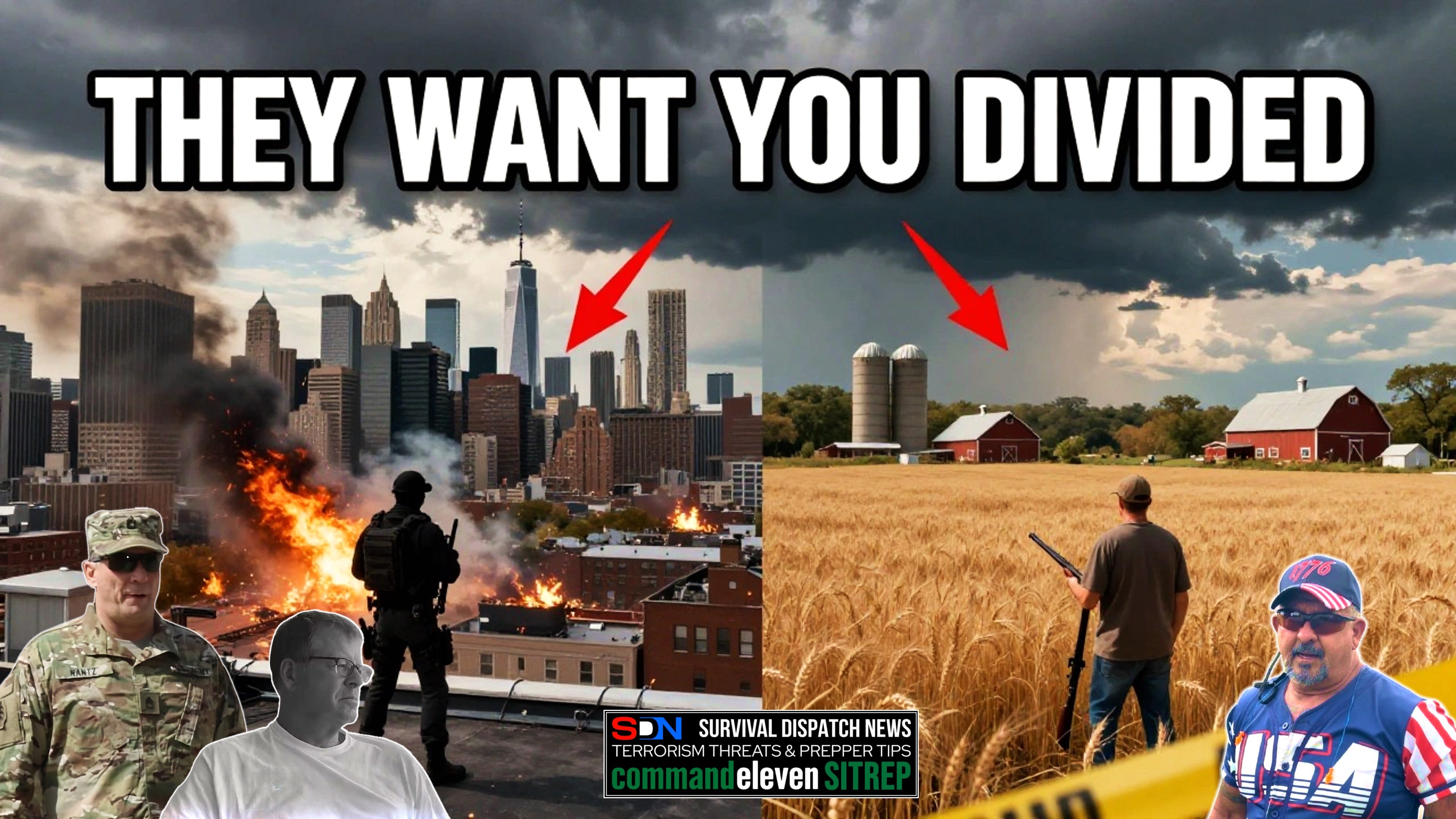
BLUF MAIN TOPIC: Post 9/11 2.0 complex coordinated terrorist attacks on 10-15 American cities: Cities vs Countryside. Urban-rural divide - resource control, ideology, and security needs split urban centers from rural regions.
DISCLOSURE: This post contains affiliate links. If you make a purchase through them, we may earn a small commission at no extra cost to you. This helps keep our work independent. Thank you for your support.
The next wave of terror won’t look like September 11th. Intelligence patterns suggest coordinated strikes across 10 to 15 American cities, designed to fracture our nation along its most vulnerable fault line - the urban-rural divide. While city dwellers depend on fragile just-in-time supply chains and centralized infrastructure, rural communities maintain food production, water access, and defensive advantages. This isn’t about red versus blue politics anymore. It’s about survival architecture. Urban centers will implement martial law within 72 hours, using population density as justification for authoritarian control. Meanwhile, rural regions will activate community defense networks that have been quietly preparing since the first tower fell.

The federal response playbook assumes unified command and control, but simultaneous attacks will shatter that illusion. Cities will demand immediate resource allocation while rural areas secure their perimeters. When truckers refuse to enter hostile urban zones, the real crisis begins. Three days without deliveries transforms any metropolitan area into a pressure cooker. The countryside has cattle, crops, and ammunition. Cities have population density and desperation. This divide isn’t accidental - it’s been engineered through decades of policy that concentrated resources and dependency in urban cores while dismissing rural America as backwards. Now that vulnerability becomes destiny.
STAND WITH THE MISSION …
If you rely on our SITREPs and ThreatWire briefings to stay ahead of what’s coming, upgrade to Guardian today. Your support keeps SDN independent and our intelligence flowing, no filters, no sponsors, no censorship.
BEEF PRICES HAVE GONE UP AGAIN. CARNIVAULT IS HOLDING THE LINE UNTIL JAN 15TH. LOCK-IN YOUR SUBSCRIPTION TO FREEZE YOUR PRICE FOR 12 MONTHS.

PRACTICAL TIPS | MAIN TOPIC
Your survival strategy depends entirely on your current position. Urban residents have 24 to 48 hours maximum to execute evacuation plans before checkpoints lock down major arteries. Keep vehicle fuel tanks above three-quarters at all times - gas stations will either run dry or require military authorization within hours of coordinated strikes. Rural communities must activate mutual aid networks immediately, establishing 24-hour watch rotations and communications protocols. Ham radio becomes primary comms when cell towers fail or get commandeered. Store water now - municipal systems are primary targets and rural wells require power for pumps. Urban apartments need minimum 30 gallons per person while rural properties should maintain 500-gallon reserves.

Establish cache sites along evacuation routes with basic supplies (water, ammunition, medical, food) buried in weatherproof containers. Mark locations using natural landmarks, not GPS coordinates that require functioning devices. Create laminated area maps showing alternate routes, natural water sources, and defensible positions. Urban dwellers must identify three separate evacuation routes avoiding highways - assume primary roads become kill zones or detention corridors. Rural defenders need overlapping fields of fire covering all approach routes to their properties. Coordinate with neighbors now about response protocols - waiting until crisis hits guarantees chaos. Medical supplies matter more than ammunition after day three. Stock antibiotics, trauma supplies, and chronic medication reserves. Cities will triage medical care by social credit score while rural areas simply won’t have advanced trauma capabilities.
