


The Unfiltered Voice of Christian Preparedness
Watch the recorded episode HERE.
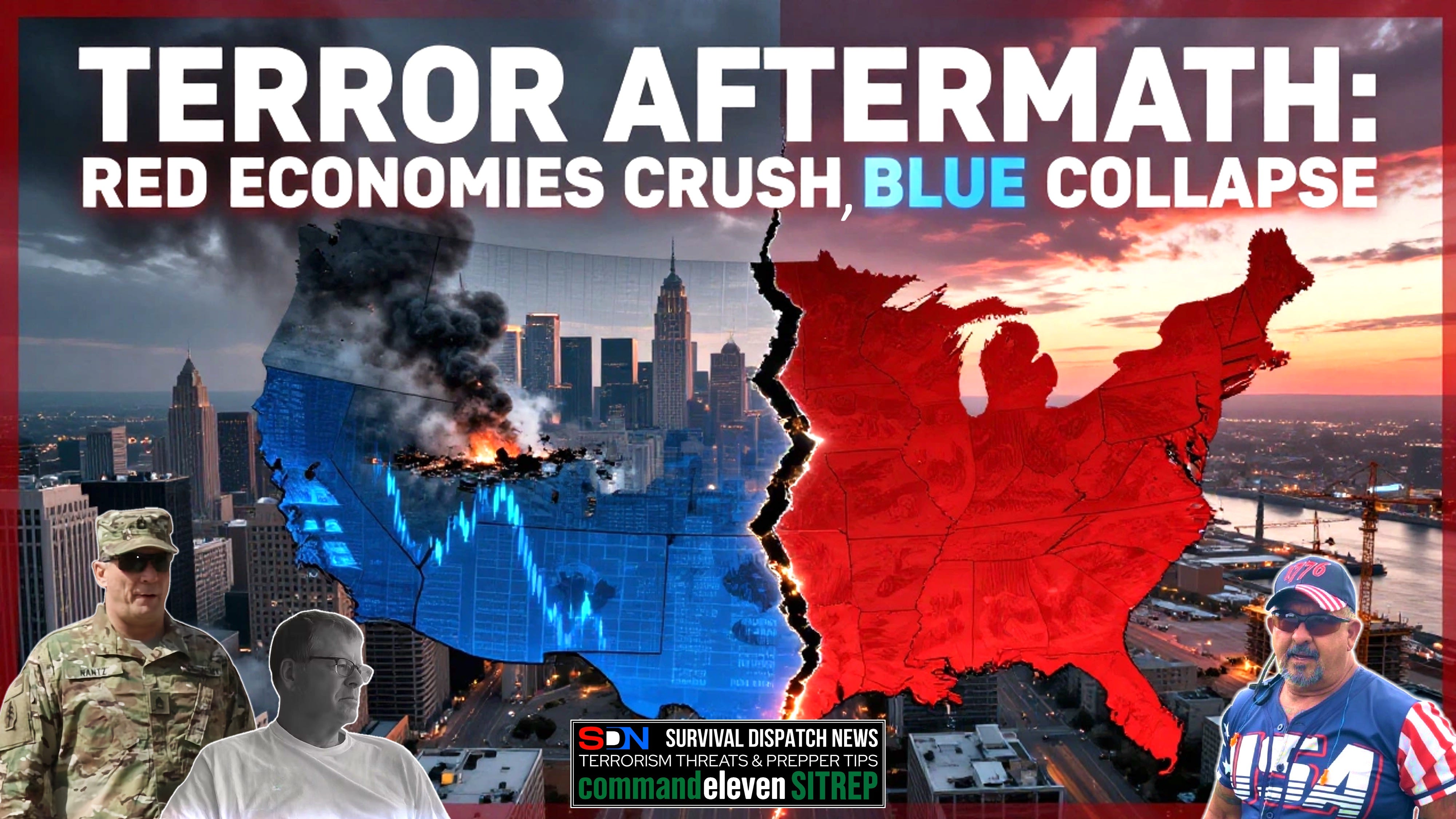
BLUF MAIN TOPIC: Post 9/11 2.0 complex coordinated terrorist attacks on 10-15 American cities: Red State vs Blue State Economies. Diverging systems - Economic models fracture along ideological lines, creating competing financial realities.
The next major terror wave will not just be measured in casualties or rubble, it will be measured in economic outcomes.
DISCLOSURE: This post contains affiliate links. If you make a purchase through them, we may earn a small commission at no extra cost to you. This helps keep our work independent. Thank you for your support.
In a 9/11 2.0 scenario involving coordinated attacks across multiple American cities, the response will expose a fault line that has been widening for years. Red states and blue states do not operate under the same economic assumptions, and crisis magnifies that reality. Conservative led states tend to rely on decentralized decision making, private sector logistics, energy independence, and rapid permitting. Those traits translate into faster reopening of ports, trucking lanes, manufacturing, and energy production. Capital flows where friction is low, and recovery follows. Blue states, by contrast, are burdened by centralized control, regulatory choke points, and dependency on federal intervention. When systems are stressed, those models slow down. Businesses wait, workers wait, and capital leaves. This is not theory, it is pattern recognition rooted in past disasters, riots, lockdowns, and supply chain shocks. Scripture teaches that wise builders prepare their house before the storm. In the aftermath of terror, states that value order, work, and accountability will stabilize faster, while those trapped in ideology will struggle to regain footing.

STAND WITH THE MISSION …
If you rely on our SITREPs and ThreatWire briefings to stay ahead of what’s coming, upgrade to Guardian today. Your support keeps SDN independent and our intelligence flowing, no filters, no sponsors, no censorship.
PRACTICAL TIPS | MAIN TOPIC
In a fractured recovery environment, households and small businesses must think like resilient states. First, reduce dependency on single point systems. Banking access, fuel availability, food supply, and communications should never rely on one provider or one jurisdiction. Second, prioritize mobility. Economic survival after terror favors those who can relocate operations, inventory, or labor quickly. Third, build relationships with local producers, tradesmen, and logistics operators now, not after the event.
GET 25% OFF WITH CODE SD25 AT WASATCH WAGYU FOR ONE WEEK BEFORE THE DISCOUNT CODE GOES BACK TO SD25

Red state economies rebound faster because networks already exist outside government channels. Fourth, harden your income streams. Remote work tied to blue state tax and regulatory structures is fragile. Skills tied to energy, repair, transport, agriculture, and security remain in demand under stress. Fifth, keep cash and hard assets accessible. Delays in government response and financial systems are predictable. Faith based preparedness is not fear driven, it is obedience to wisdom. The goal is not panic, it is continuity, providing for your family and your community when systems fail unevenly across the country.

EXCLUSIVE CONTENT | MAIN TOPIC
Everyday Americans must accept that post attack America will not be economically uniform. Recovery will be regional, political, and moral.
