


Preparedness culture has a dirty secret it doesn’t want to admit.
Most of the people who talk the loudest about “being ready” wouldn’t survive a real gunfight.
Not a range day. Not a clean little home-defense fantasy. Not the made-for-YouTube version where the bad guy politely appears in your doorway and you heroically grab your rifle, shoulder it, and end the threat in three perfectly placed shots.
A real gunfight.
The kind that happens fast, in chaos, in darkness, with screaming in the background, with uncertainty and movement and confusion, with no clear picture of what’s happening and no guarantee you even know where the threat is.
Most preppers aren’t prepared for that. They’re prepared for an imaginary version of violence that doesn’t exist.
And that delusion is exactly what Phase III is about.
Because delusion is the killer. Not lack of gear. Not lack of ammo. Not lack of “knowledge.”
Delusion.
DISCLOSURE: This post contains affiliate links. If you make a purchase through them, we may earn a small commission at no extra cost to you. This helps keep our work independent. Thank you for your support.
The Lie That Kills People First
The most common prepper belief is simple:
“When it happens, I’ll rise to the occasion.”
That’s the first lie that gets people killed.
It’s the idea that the moment danger arrives, something inside you will flip like a switch and you’ll suddenly become a different man. Calm. Focused. Accurate. Aggressive. In control.
But stress doesn’t turn most people into warriors.
It turns them into wreckage.
When real violence hits, your body doesn’t cooperate. Your heart rate spikes. Your hands shake. Your breathing collapses. Your mind starts skipping steps. The world narrows. Sound distorts. Your vision tunnels. You stop processing information correctly.
In other words, you don’t become the hero.
You become what you’ve conditioned yourself to be.
And if you’ve conditioned yourself mostly through talking, reading, fantasizing, and buying equipment, then you aren’t conditioning at all. You’re roleplaying.
Under pressure, you won’t perform like you hope. You will perform like you trained.
And most preppers haven’t trained for anything that resembles a real fight.

Marksmanship Isn’t Combat
The second delusion is the one that makes men feel confident right up until the moment they die:
“I’m a good shot.”
Most preppers equate shooting ability with fighting ability. That’s understandable, because marksmanship is measurable. It’s clean. It’s controllable. It’s safe. You can walk onto a range, shoot a tight group, and walk away feeling like you’re ready for war.
But the range is not combat.
The range is a calm environment where you choose the distance, choose the target, choose the time, and choose the stance. Your nervous system is stable. Your mind is clear. There is no screaming. There is no movement. There is no uncertainty.
In a real gunfight, you’re not standing in a perfect posture with a calm heartbeat. You’re moving. You’re crouched. You’re off-balance. You’re trying to process threats, angles, and sound while your brain is overloaded and your body is screaming at you to run.
You might be in a hallway. You might be in a parking lot. You might be in a crowded store. You might be trying to move your kids behind cover while someone is firing at you from an unknown location.
That’s not “shooting.”
That’s fighting.
And most people who call themselves “good shots” have never tested their ability to hit a target while their body is in full panic mode.
The first time they try won’t be on a training course.
It will be when the rounds are real.

The Consumer Religion of Gear
The third delusion is the one that has become an entire industry:
“My gear will save me.”
Preparedness has turned into a marketplace of false confidence. Plate carriers, helmets, chest rigs, belts, optics, lights, night vision, comms, medical kits. A thousand little items designed to create the feeling of competence without requiring competence.
Most of it looks impressive. Some of it is useful. None of it matters if you can’t function under pressure.
And the truth is, many of the people with the best gear have never trained in it. They’ve never sprinted in plates. They’ve never fought with sweat pouring into their eyes. They’ve never tried to reload while exhausted. They’ve never discovered what happens when a sling catches on a doorway. They’ve never learned how quickly a “perfect setup” becomes a liability when you’re moving fast, stressed, and disoriented.
In real violence, your equipment doesn’t give you power. It gives you problems. Everything that isn’t second nature becomes friction. Everything that isn’t tested becomes a failure point.
And the gunfight doesn’t pause while you fix your straps.
You don’t get to call a timeout because your pouch placement was wrong.
You just bleed.
STAND WITH THE MISSION …
If you rely on our SITREPs and ThreatWire briefings to stay ahead of what’s coming, upgrade to Guardian today. Your support keeps SDN independent and our intelligence flowing - no filters, no sponsors, no censorship.
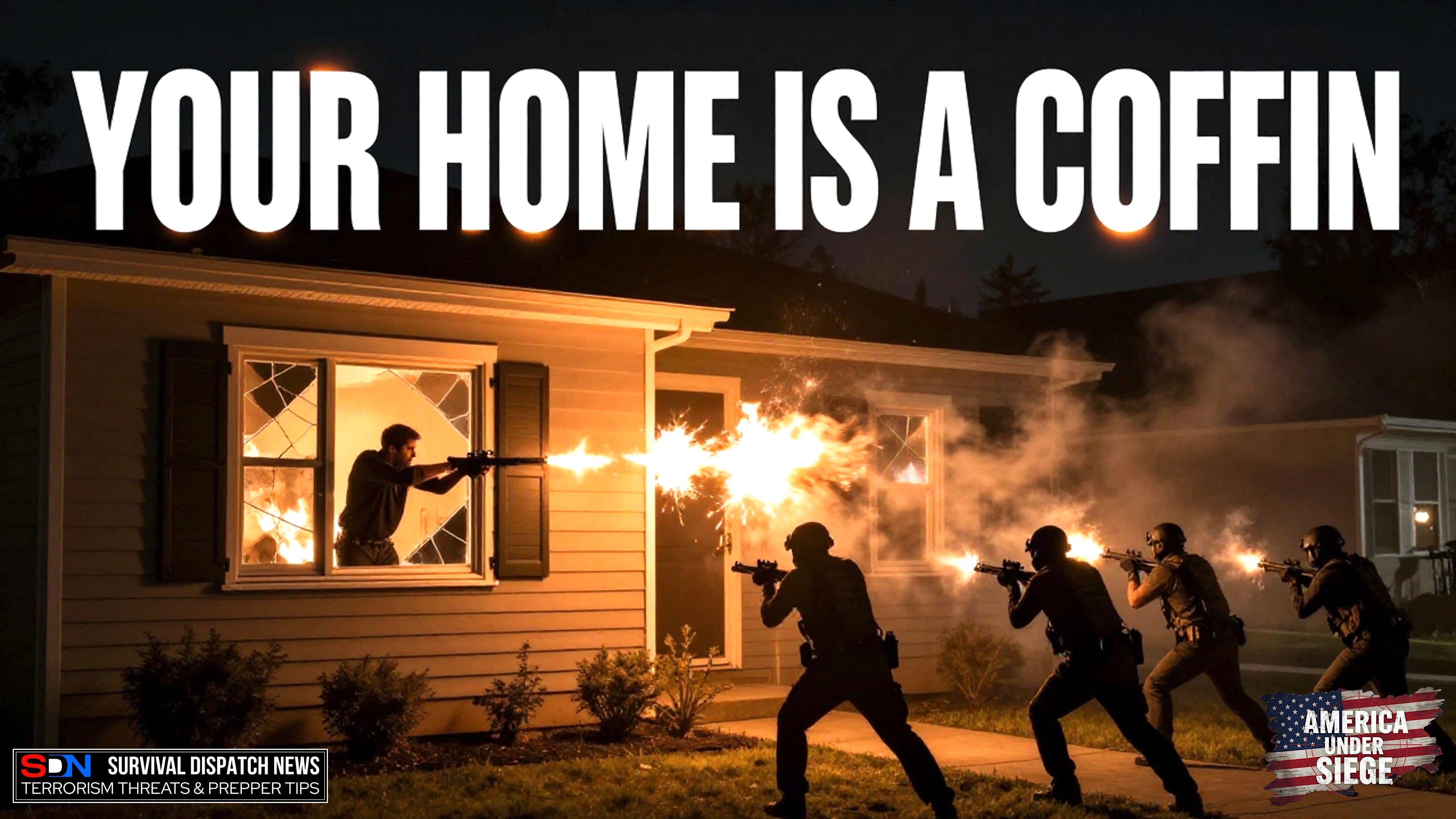
The Fantasy of Defending the House
The next delusion is the one men love because it feels righteous:
“I’ll defend my home.”
It sounds noble. It sounds masculine. It sounds like duty.
But most of the time it’s not duty.
It’s ego.
Most homes are not defensible positions. They are drywall boxes with windows and multiple entry points. They are full of blind corners. They are full of sound traps and choke points and unknown angles. They are full of people you love who will not behave like trained teammates.
If multiple attackers want you dead and they know where you are, you are already behind. You are not holding a fortress. You are holding a target.
This is where preparedness becomes deadly, because men confuse “standing your ground” with “winning the fight.” They assume bravery will make up for tactical disadvantage.
But bravery doesn’t stop bullets.
Sometimes the correct decision is to hold. Sometimes the correct decision is to fight. But most preppers have never practiced the harder skill: knowing when to leave.
And that lack of discipline is what turns a home-defense situation into a funeral.

