


The Unfiltered Voice of Christian Preparedness

Modern Americans rarely think about the electrical grid until the lights flicker during a storm. That complacency is dangerous. The U.S. power grid is the single most critical piece of infrastructure in the country, and it is also one of the most vulnerable. It is a sprawling, aging network of generation plants, substations, transmission lines, and transformers that was never designed to withstand coordinated attacks by nation-state adversaries.
For years, intelligence officials and infrastructure security experts have warned that America’s enemies are studying the grid with great interest. Nations such as Iran, China, Russia, and North Korea do not need to defeat the U.S. military to inflict catastrophic damage on American society. They only need to turn the lights off and keep them off.
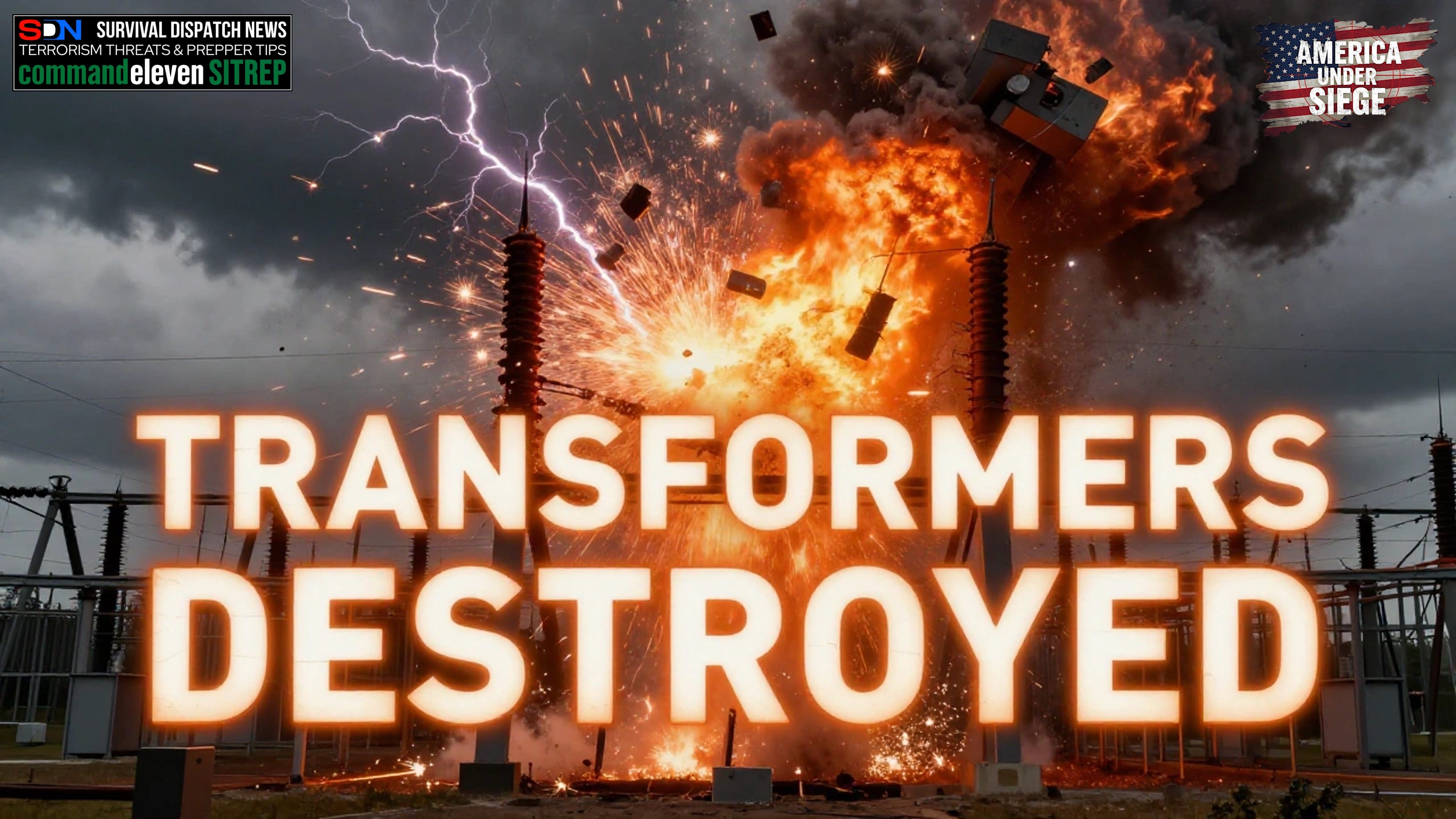
That can be accomplished in multiple ways. Cyberattacks against grid control systems can disrupt power generation and transmission. Kinetic attacks against substations can destroy critical hardware that cannot be quickly replaced. Combined cyber and physical attacks targeting key nodes in the grid could trigger cascading failures that spread across multiple regions.
The frightening reality is that this scenario has already been war-gamed extensively by government agencies, national laboratories, and infrastructure security experts. The results are sobering.
HOW AMERICA’S GRID CAN BE TAKEN DOWN
The U.S. electrical grid is not a single system. It is actually three large interconnections and thousands of utilities tied together through a complex network of substations and transformers. This complexity creates efficiency, but it also creates fragility.
Nation-state adversaries understand exactly where the pressure points are.
Several attack methods are considered particularly dangerous:
• Cyberattacks targeting SCADA and industrial control systems
• Physical attacks on high-voltage substations
• Coordinated strikes against generation plants and transmission nodes
• Malware designed to destroy grid equipment rather than simply disrupt it
• Supply chain sabotage of grid components
Russia has already demonstrated the effectiveness of cyber grid attacks in Ukraine. Iranian cyber units have repeatedly probed U.S. critical infrastructure networks. Chinese intrusion campaigns targeting American utilities have been documented by federal agencies for years.
When these capabilities are combined with targeted kinetic attacks against substations and transformers, the potential for widespread grid failure becomes very real.
THE NEXT LAYER IN RESILIENT COMMS
The POCLink PRO radio runs on Starlink, WiFi, and 4G - meaning you can still talk when cellular fails but internet stays up.

DISCLOSURE: This post contains affiliate links. If you make a purchase through them, we may earn a small commission at no extra cost to you. This helps keep our work independent. Thank you for your support.
THE TRANSFORMER PROBLEM
One of the most dangerous vulnerabilities in the American grid is the reliance on Large Power Transformers (LPTs).
These are the massive transformers that step voltage up and down across transmission networks. Without them, electricity cannot move from power plants to cities.
The problem is simple: they are extremely difficult to replace.
Large Power Transformers have several characteristics that make recovery slow:
• They weigh between 100 and 400 tons
• They are custom built for each installation
• Most are manufactured overseas
• They require specialized transportation and cranes
• Installation takes months even after delivery
Lead times are the real danger.
Typical timelines for Large Power Transformers:
• Standard transformers: 6–18 months
• Large Power Transformers: 12–24 months
• In surge demand scenarios: 2–4 years
If adversaries destroy dozens of key transformers simultaneously, the United States does not have the manufacturing capacity to replace them quickly.
That means power outages measured not in days or weeks, but in months or years.

WHAT WAR GAMES SAY WILL HAPPEN
Infrastructure collapse has been modeled repeatedly by national security planners. The projections vary depending on assumptions, but the broad patterns remain consistent across multiple simulations.
The longer the grid stays down, the more catastrophic the consequences become.
THE INTEL LAYER IS OPEN
This week starts with reset and spring ramp-up. Guardians operate with the full threat picture, not just headlines.
If you rely on these SITREPs to stay oriented, step into the Guardian tier while the window is open.
💥 40% OFF annual: $59.99/yr (was $99.99). Monthly stays $9.99.
⏳ Drive ends midnight Thursday.
