



INSIDE THE JIHAD PIPELINE PART ONE OF FIVE
SUPPORT INDEPENDENT INTELLIGENCE
If you value reporting that says what others won’t, help keep it going. Guardians support the intel, research, and preparedness reporting we publish every day.
How Jihadist Radicalization Pipelines Actually Work
For years the public conversation about terrorism has focused on the final moment — the explosion, the gunfire, the police sirens, and the breaking news banner.
But that moment is not where terrorism begins.
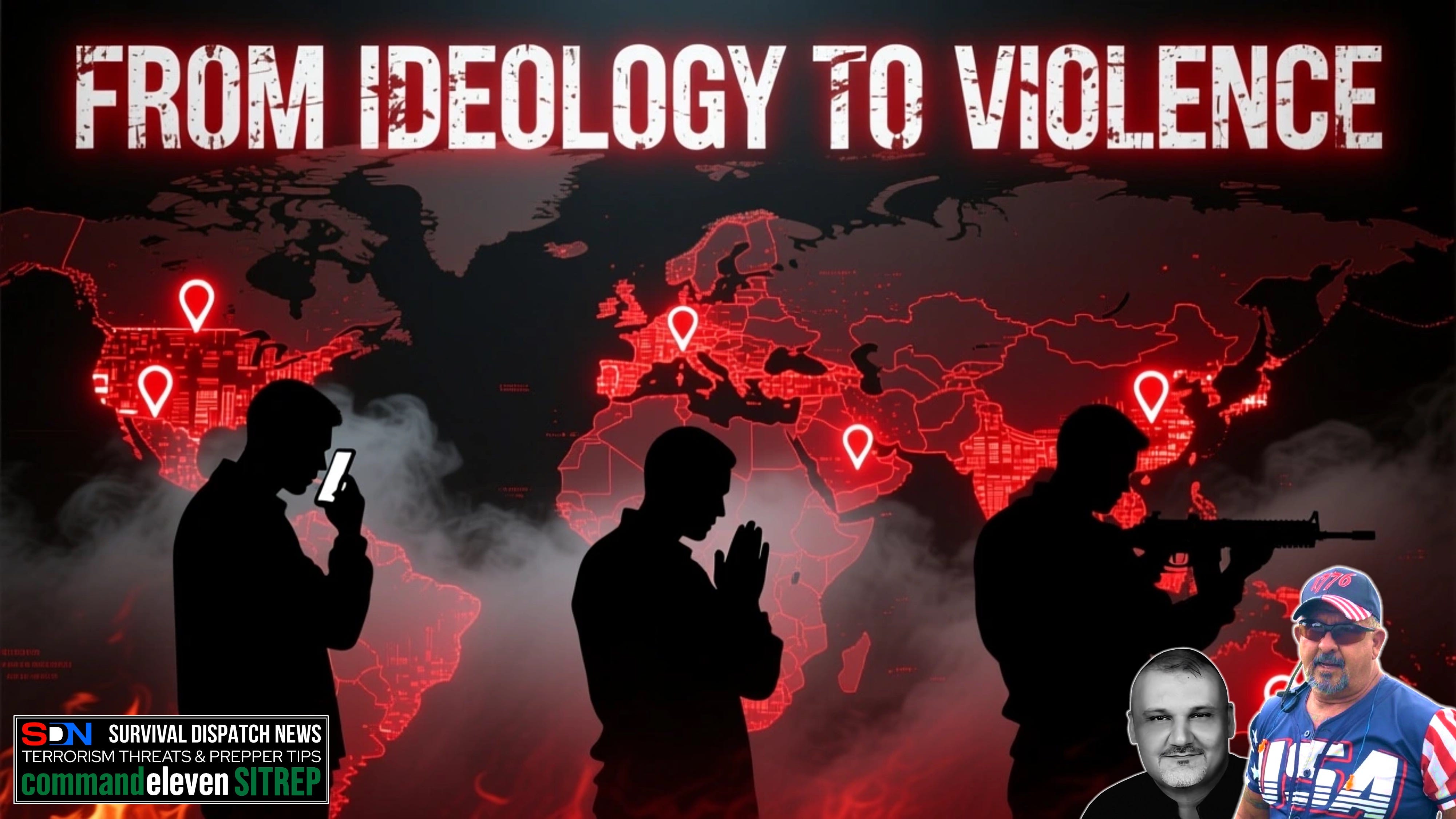
By the time an attacker shows up on the evening news, the process that produced him has usually been unfolding for months or years. Radicalization rarely happens overnight. It is the result of a pipeline — a progression of ideas, influences, and networks that slowly transform grievance into ideology and ideology into violence.
Understanding that pipeline matters, because if you only study the attack, you miss the system that created the attacker.
That system is what we are going to examine in this series.
And once you see how the pipeline works, you start to realize something unsettling.
Most people only notice the threat when it is already too late.
The Radicalization Pipeline
Contrary to popular myth, jihadist terrorism is rarely the product of someone simply “snapping.”
Investigations into extremist networks around the world have repeatedly shown a far more structured process. Individuals are exposed to narratives that frame global events as a struggle between believers and enemies. Over time those narratives evolve into ideological commitments. Eventually, in a small number of cases, those commitments turn into operational planning.
The journey from grievance to violence usually follows a recognizable path.
First comes identity and grievance. Political conflicts overseas, cultural tensions at home, and personal frustrations are framed as evidence of a global struggle.
Then comes ideological reinforcement. Extremist propaganda reframes those grievances through a religious or ideological lens, presenting violence as justified or even obligatory.
Next comes social reinforcement. Individuals rarely radicalize completely alone. Online communities, private chats, and personal networks create echo chambers where extreme views are normalized.
Finally comes operationalization — the stage where ideology turns into action.
That final stage is the one the public sees.
The earlier stages are where the real story happens.

DISCLOSURE: This post contains affiliate links. If you make a purchase through them, we may earn a small commission at no extra cost to you. This helps keep our work independent. Thank you for your support.
Radicalization in the Digital Age
One of the most important changes in modern extremism is the role of digital networks.
Two decades ago, extremist recruitment relied heavily on physical networks and travel to foreign conflict zones. Today, radicalization often begins online.
Encrypted messaging platforms, propaganda channels, and ideological forums allow extremist groups to reach audiences around the world instantly. A person sitting in a Western city can be exposed to the same messaging that once circulated only in conflict zones.
This shift has created a decentralized ecosystem. Recruitment does not always require direct contact with a formal terrorist organization. Ideology spreads through digital networks that function like self-reinforcing feedback loops.
That decentralization makes the pipeline harder to detect.
It also makes the threat harder for the public to recognize.
Why Most People Miss the Warning Signs
One of the reasons radicalization pipelines are so dangerous is that they unfold quietly.
The early stages often look like ordinary political or religious discussion. Only later do the ideas become more rigid and extreme. By the time a person openly supports violence, the ideological groundwork has usually been laid for a long time.
For investigators, the challenge is separating constitutionally protected speech from genuine warning signs.
For ordinary citizens, the challenge is even harder.
Most people simply do not know what the pipeline looks like.
That lack of awareness creates a dangerous gap between the emergence of extremist ideas and the moment when authorities finally intervene.
By then, the process may already be far advanced.
The Strategic Advantage Extremist Networks Exploit
Extremist movements have always understood something that the public often forgets.
Violence is only one part of their strategy.
Ideology, recruitment, and narrative warfare come first.
When those elements are successful, violence becomes easier to carry out because the attacker believes he is acting as part of a larger cause.
In other words, the real battlefield begins long before the attack.
It begins in the realm of ideas.
And that battlefield is where the pipeline operates.
🔥 TRIPLE VALUE. ZERO EXTRA COST.
Subscribe to Carnivault & get:
✔️ Premium protein
✔️ 12-month price lock in a volatile market
✔️ FREE SDN Guardians membership
With energy markets already spiking due to the expanding Iran conflict - and over 20% of global oil moving through the threatened Strait of Hormuz - locking in your meat price for the next 12 months isn’t a perk …
It’s protection.

What Comes Next
In the next installment of this series, we will examine the infrastructure that allows extremist networks to sustain themselves — the propaganda channels, financial support systems, and transnational connections that keep the pipeline alive.
Because radicalization does not operate in isolation.
It depends on an ecosystem.
And understanding that ecosystem is the only way to see the full picture of how modern extremist networks function.
SUPPORT INTELLIGENCE THAT ACTUALLY MATTERS
Survival Dispatch News exists for one reason: to give serious Americans the intelligence and preparedness information the mainstream media ignores.
Guardian members get:
• Full investigative reports like this series
• Daily SITREPs and threat intelligence
• Private Guardian intel channels
• Preparedness resources and archives
If you want to stay ahead of the curve instead of reacting after the fact, become a Guardian today.
